MOTS-C 10mg
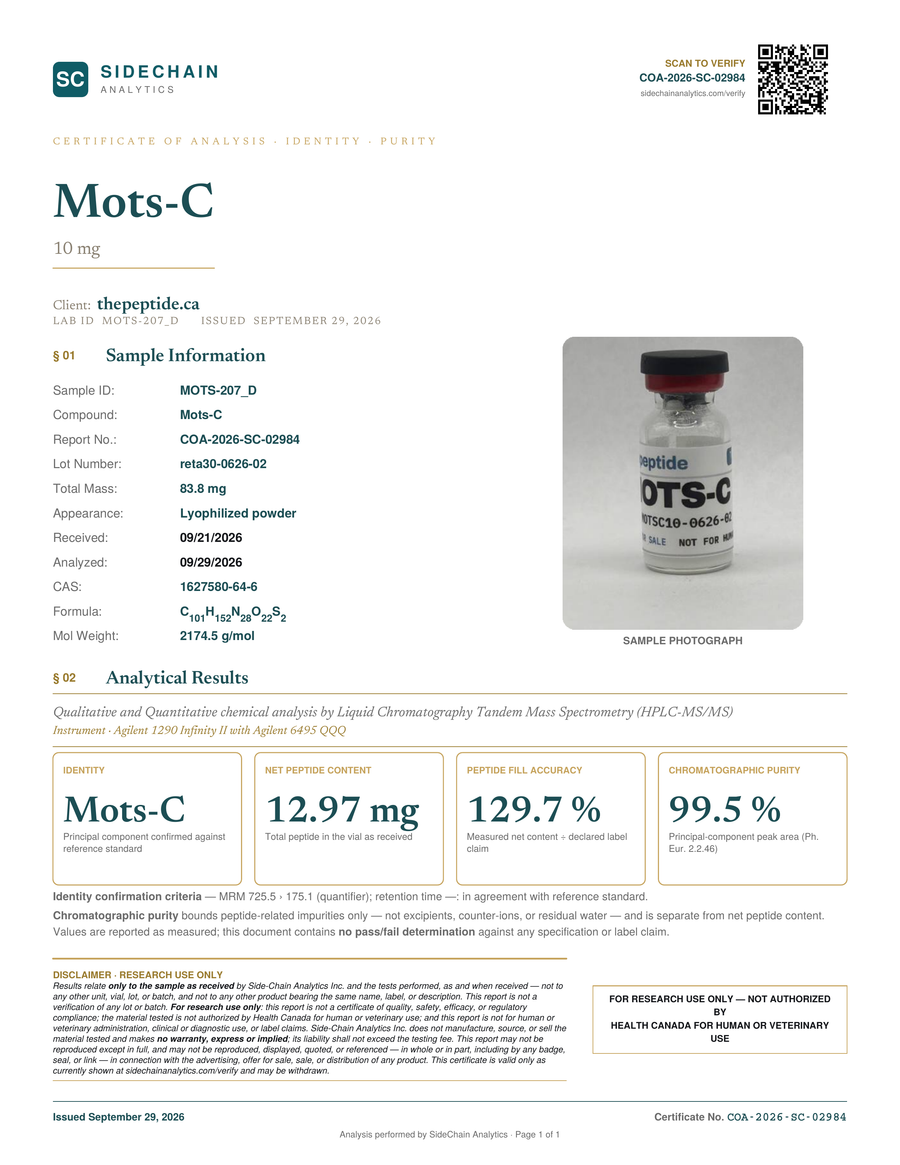
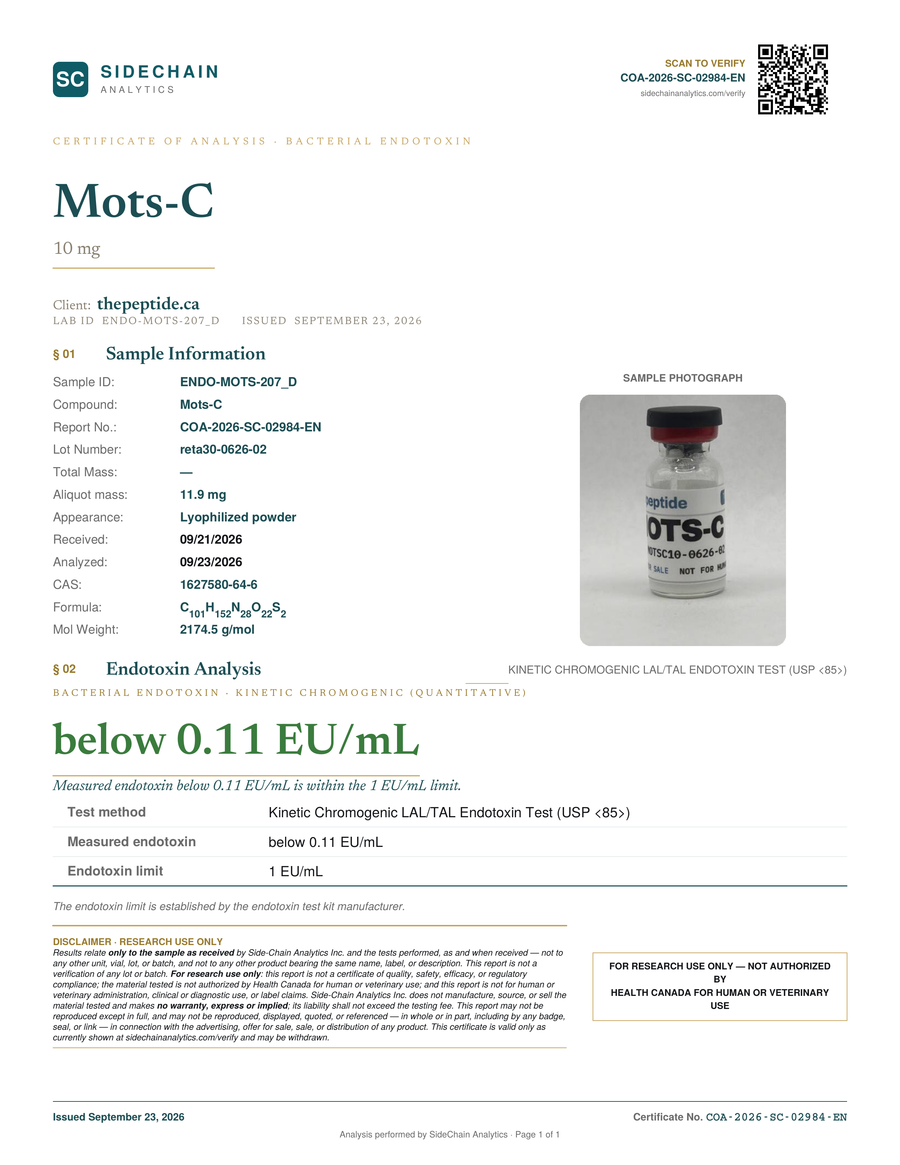
Mitochondrial-Derived PeptideSideChain Analytics certificate (HPLC-MS/MS). 99.5% chromatographic purity (Ph. Eur. 2.2.46), 12.97 mg net content vs 10 mg label. Separate endotoxin certificate below 0.11 EU/mL (report COA-2026-SC-02984-EN). Verify report COA-2026-SC-02984 at sidechainanalytics.com.
✓ Two SideChain certificates held — 99.5% purity, identity confirmed, endotoxin below 0.11 EU/mL
Both tests were commissioned by us from SideChain Analytics, Mississauga, Ontario. Identity and purity — report COA-2026-SC-02984, analysed 29 September 2026 by HPLC-MS/MS (Agilent 1290 Infinity II with a 6495 QQQ): 99.5% chromatographic purity (principal-component peak area, Ph. Eur. 2.2.46), identity confirmed against a reference standard, and 12.97 mg net peptide content against a 10 mg label (129.7% fill). Bacterial endotoxin — report COA-2026-SC-02984-EN, analysed 23 September 2026: below 0.11 EU/mL by kinetic chromogenic LAL/TAL assay (USP <85>), against a 1 EU/mL limit. The laboratory's public record shows each report as verified and signed by its lab director.
Verify at SideChain Analytics · View the certificate (PDF) · All lot results
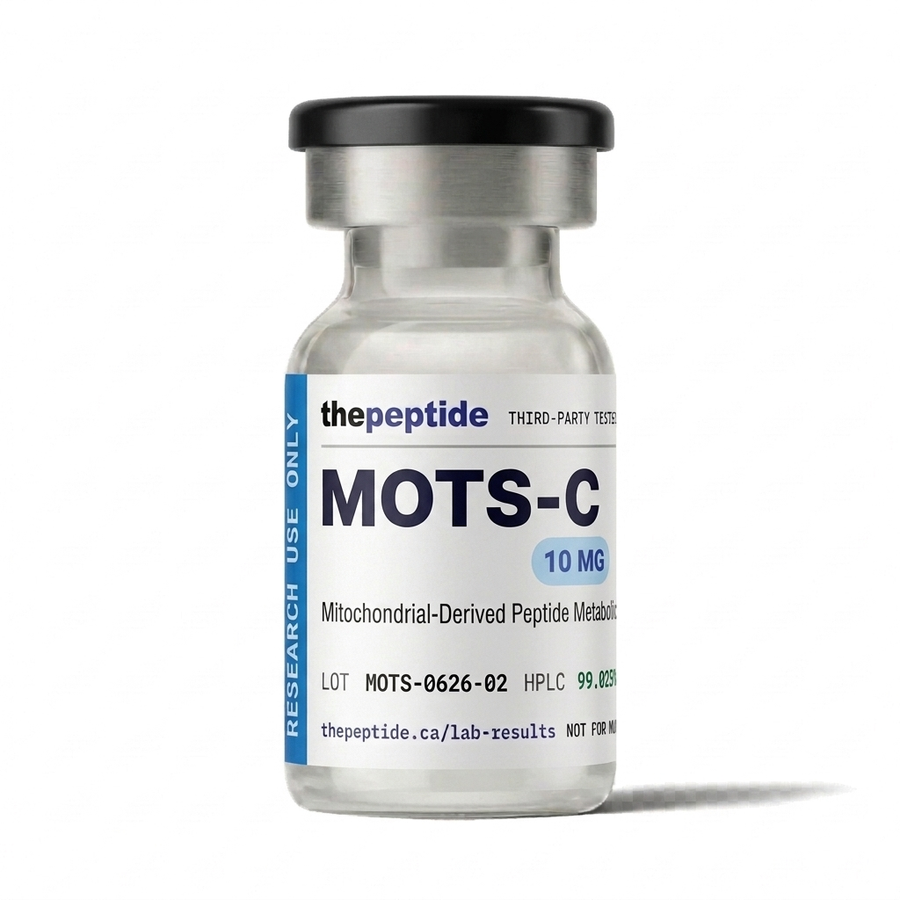
MOTS-C is a 16-amino-acid peptide encoded not in the nucleus but in mitochondrial DNA, inside the gene for the 12S ribosomal RNA, supplied here as 10 mg of lyophilised powder for laboratory research use only.
This vial carries two certificates of our own, on two separate aliquots of the same sample: one for identity and purity, one for bacterial endotoxin. Both were commissioned by us, not by the manufacturer, and both are verifiable at the laboratory. The earlier figures we published — 99.025% purity and 11.82 mg content, from a manufacturer-commissioned Janoshik Analytical assay (#147077, April 2026) — remain visible below for comparison. Two laboratories, two preparations, two sets of numbers; we publish both rather than only the flattering one.
Chemically, MOTS-C is CAS 1627580-64-6, sequence MRWQEMGYIFYPRKLR, formula C101H152N28O22S2, molecular weight 2,174.62 g/mol. The two sulfurs are the methionines at positions 1 and 6.
What makes MOTS-C interesting as a reagent is where it comes from. Most signalling peptides are encoded in the nuclear genome. MOTS-C belongs to a small class of mitochondrial-derived peptides, and the published work frames it as a way the mitochondrion signals metabolic state to the rest of the cell, acting principally in skeletal muscle and through AMPK. That work is almost entirely in cells and mice, which the sections below make explicit.
For laboratory and research use only. Not for human consumption, veterinary use, or therapeutic application. Not approved by Health Canada. We do not provide preparation, dilution or administration guidance for any compound we sell.
Read the full research guide →Shipping is free and tracked, Canada-wide, on every order, with no minimum. Orders are dispatched within 48 hours, Monday to Friday, from British Columbia. Estimated delivery: 2–8 business days.
Sealed, unopened vials are exchangeable within 14 days of delivery. Report damage within 48 hours of the expected delivery date.