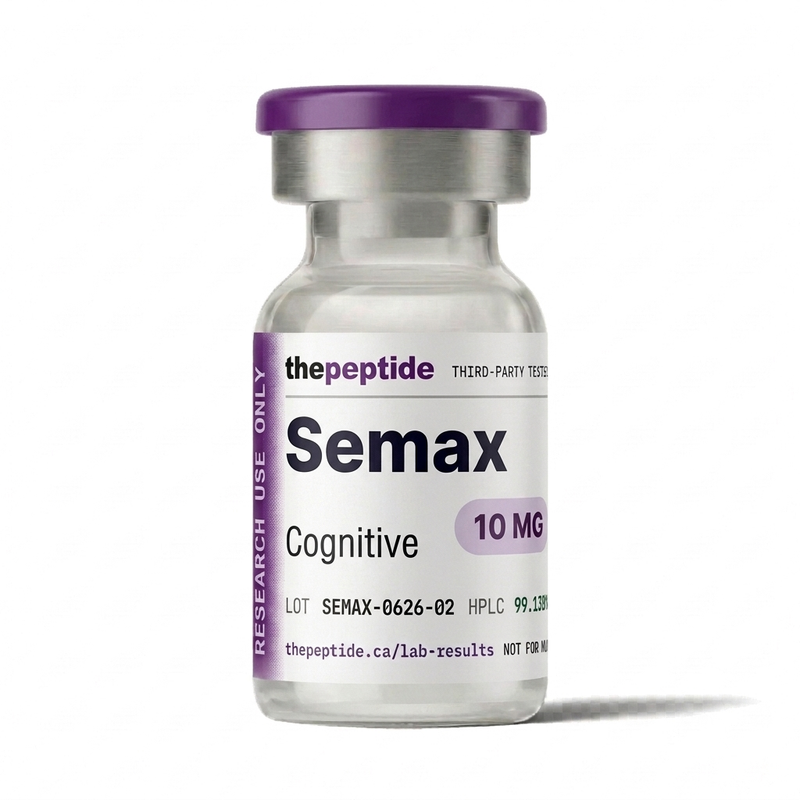
Semax 10mg
ACTH(4-7) Heptapeptide Analogue
✓ Third-party tested — lot CS-sem10-0625
Assayed by Janoshik Analytical, report #200391, analysis conducted 13 July 2026: 99.138% purity by reverse-phase HPLC, measured content 11.32 mg against a 10 mg label.
View the batch COA · Testides (Toronto) confirmation pending
Semax is a synthetic heptapeptide derived from the ACTH(4-7) fragment of adrenocorticotropic hormone, supplied here as 10 mg of lyophilised plain (non-acetylated, non-amidated) peptide for laboratory research use only.
The ACTH relationship is worth stating exactly, because most listings state it loosely. Human ACTH(4-10) is Met-Glu-His-Phe-Arg-Trp-Gly; Semax is Met-Glu-His-Phe-Pro-Gly-Pro. It retains ACTH residues 4–7 (Met-Glu-His-Phe) unchanged and replaces Arg⁸-Trp⁹-Gly¹⁰ with a Pro-Gly-Pro tripeptide — the substitution that confers proteolytic stability, since native ACTH(4-10) is rapidly degraded by blood enzymes (Potaman et al., BBRC 1991). Both literature names, ACTH(4-7)PGP and (Pro⁸,Gly⁹,Pro¹⁰)ACTH(4-10), describe the same seven residues; the bare phrase "ACTH(4-10) analogue" hides the mechanistically important part, which is which two residues were discarded.
Semax is a heptapeptide — seven residues, sequence MEHFPGP — formula C₃₇H₅₁N₉O₁₀S, average molecular weight 813.93 g/mol, CAS 80714-61-0, also supplied as the acetate salt. One vial contains 10 mg of white to off-white lyophilised powder, no excipient. A second CAS, 4037-01-8, circulates on vendor pages and Wikipedia as a Semax identifier; it is in fact the CAS for unmodified human ACTH(4-10), a different peptide, and we do not reproduce it.
This is plain Semax — not N-acetyl Semax, not N-acetyl Semax amidate
Three molecules circulate under overlapping names and buyers confuse them constantly. This vial is plain Semax: H-Met-Glu-His-Phe-Pro-Gly-Pro-OH, free acid or acetate salt, MW 813.93, CAS 80714-61-0 — neither acetylated at the N-terminus nor amidated at the C-terminus. N-Acetyl Semax Amidate (NASA, MW 854.98, CAS 2920938-90-3) is a different compound, always sold as its own SKU, and a 10 mg NASA vial holds roughly 5% fewer moles than this one. The terminal modifications are documented as stability changes, not potency changes, and there is no clinical literature on either N-acetylated form — every Russian clinical study used plain Semax.
Read this before anything else written about Semax
Semax has been studied since 1982 and holds an active Russian medicine registration, and that combination lends it clinical authority it has not earned. The evidence base is overwhelmingly Russian-language, concentrated in a handful of Moscow institutions, largely untranslated, and methodologically weak by the standards applied to any modern drug candidate. No large randomised, blinded, placebo-controlled trial exists anywhere; no registered protocols exist for the foundational work; independent Western replication of the clinical findings is essentially absent. That does not make Semax uninteresting as a reagent — it has a demonstrated but unidentified high-affinity binding site in rat brain, and a 2025 Br J Pharmacol paper proposing an entirely new target. It does mean anything framed as "clinically proven" is wrong.
Semax's mechanism of action is unknown. The best-supported observations — BDNF and trkB expression changes in rat brain, increased serotonergic turnover, an anti-inflammatory transcriptome shift in rodent ischemia models — are all rodent or in-vitro, and there is no human receptor occupancy, pharmacokinetic or target-engagement data of any kind. Two claims that dominate vendor copy are contradicted by their own primary sources: Semax did not change dopamine on its own, and it is not established as a melanocortin-receptor agonist.
We supply this material strictly as a reagent for in-vitro and animal-model work, and publish no dosing, route, schedule or protocol information — none has been established by any Western regulator, and the only human dosing that exists sits inside a Russian prescription label for a nasal-drop product we do not sell.
For laboratory and research use only. Not for human consumption, veterinary use, or therapeutic application. Not approved by Health Canada. We do not provide preparation, dilution or administration guidance for any compound we sell.
Key specifications
See product label and the Overview tab.
Specifications
| Compound | Semax (plain; non-acetylated, non-amidated) |
| Systematic name | L-methionyl-L-α-glutamyl-L-histidyl-L-phenylalanyl-L-prolyl-glycyl-L-proline |
| Alternative names | ACTH(4-7)PGP; (Pro⁸,Gly⁹,Pro¹⁰)ACTH-(4-10); MEHFPGP; Semax acetate |
| Compound class | Synthetic linear peptide; melanocortin-derived ACTH fragment analogue (ATC N06BX in Russia) |
| CAS number | 80714-61-0 |
| Molecular formula | C₃₇H₅₁N₉O₁₀S |
| Molecular weight | 813.93 g/mol average; 813.348 Da monoisotopic ([M+H]⁺ 814.355) |
| Sequence (one-letter) | MEHFPGP |
| Sequence (three-letter) | H-Met-Glu-His-Phe-Pro-Gly-Pro-OH |
| Peptide length | 7 residues (heptapeptide); no disulfide bonds; isoelectric point ~5.2 |
| Vial contents | 10 mg lyophilised powder, white to off-white, no excipient, sealed vial |
| Current lot | CS-sem10-0625 |
| Verified purity | 99.138% |
| Measured content | 11.32 mg per vial (10 mg label) |
| Test method | Reverse-phase HPLC (purity and content); report #200391, conducted 13 July 2026. No mass-spectrometry identity line on this report. |
| Testing laboratory | Janoshik Analytical (independent third party) |
| Storage | Lyophilised: −20 °C, sealed, dry, protected from light; −80 °C for long-term archival |
| Research applications | Rodent and in-vitro neurotrophin (BDNF/trkB/NGF) expression studies; cerebral ischemia–reperfusion transcriptomics; deorphanisation of its own brain binding site; melanocortin structure–activity probe; monoaminergic interaction pharmacology; peptide degradation and formulation kinetics; HPLC/LC-MS reference standard |
| Ships from | British Columbia, Canada — free tracked shipping Canada-wide |
| Intended use | Laboratory research use only. Not for human or veterinary use, diagnostic use, or administration of any kind. |
- Sealed vial: −20°C, 24+ months.
- Protect from light and heat.
- Keep in original packaging until use in the laboratory.
How should lyophilised Semax be stored and handled in the laboratory?
Bench handling only. No dosing, administration, route or schedule guidance is given or implied.
Lyophilised material. −20 °C is the working standard, −80 °C for long-term archival. Keep the vial sealed and protected from moisture; peptides are hygroscopic, so equilibrate to room temperature before opening or atmospheric moisture will condense onto cold powder. Store protected from light and, where practical, under an inert argon or nitrogen headspace. Commonly quoted figures of >95% purity retained for at least 24 months come from supplier technical monographs; we found no published stability-indicating study for Semax.
The stability contradiction, resolved. Semax is genuinely robust against enzymatic degradation — the Pro-Gly-Pro extension was engineered to resist proteolysis — but that is a claim about proteolytic stability in biological matrices, not shelf stability. It is freely soluble in aqueous buffers and has no disulfide bonds, so there is no scrambling pathway. It is not chemically inert, however: methionine oxidation is its primary chemical degradation pathway. The N-terminal residue is methionine, whose thioether sulfur oxidises readily to methionine sulfoxide — +16 Da, detectable by LC-MS as an approximately 829.9 species against the 813.9 parent — accelerated by air, light, elevated temperature and trace transition metals. Minimise headspace air, protect from light, prefer metal-free buffers, and do not read "stable peptide" as licence to handle it carelessly.
Reconstitution conventions. Semax dissolves in water, PBS and aqueous buffers with no organic co-solvent or acid/base assist, which is unusual among peptides. Conventional laboratory diluents are sterile water for injection, or bacteriostatic water (0.9% benzyl alcohol) where a multi-use aliquot is needed; PBS or sterile saline where buffered isotonic conditions matter. Add diluent slowly down the vial wall and swirl or roll gently — never shake or vortex, since agitation promotes aggregation. Prepare single-use aliquots and avoid repeated freeze–thaw cycling. Reported reconstituted stability of roughly 7–14 days at 2–8 °C, a maximum-stability pH window of 4.0–6.0 (the ~5.2 isoelectric point sits inside it), and the occasional 0.1% ascorbic acid antioxidant recommendation come from supplier technical monographs, not published forced-degradation work — conventions to verify in your own system.
Plain versus N-acetylated forms. Acetylation caps the free α-amino group, removing the primary aminopeptidase attack site and eliminating the free N-terminus as a site for Schiff-base reactivity with reducing sugars or aldehyde impurities. Amidation removes the free carboxylate, raising net charge and shifting the isoelectric point upward, so the pH optimum of N-Acetyl Semax Amidate should not be assumed identical to plain Semax — and we found no published stability data for either N-acetylated form, so treat their pH optima as unknown. Critically, the oxidation liability is unchanged across all three forms: acetylation caps the amine, not the sulfur, so every form retains the same N-terminal methionine thioether and needs the same light, air and metal precautions. Lyophilised storage and the no-shaking, no-freeze-thaw rules are identical across all three.
How fast do you ship, and what does delivery cost?
Free tracked shipping Canada-wide on every order, no minimum spend. Orders are dispatched within 48 hours, Monday to Friday, from our facility in British Columbia, and a tracking number is emailed as soon as the label is generated. Vials are packed dry and sealed with protective padding in discreet outer packaging; the lyophilised powder tolerates ambient temperature for the duration of domestic transit, so move the vial to −20 °C on arrival.
Transit-time estimates by province and current dispatch status: shipping information.
What is your refund policy if an order arrives damaged?
Report transit damage or non-delivery within 48 hours of the expected delivery date to info@thepeptide.ca with your order number and photographs of the outer packaging and the vial; confirmed damage and confirmed non-delivery are resolved by replacement or refund. Sealed, unopened vials in original condition can be exchanged within 14 days of delivery. We cannot accept anything back that has been opened, punctured, reconstituted or otherwise prepared, because we have no way to verify its chain of custody or storage conditions.
Governing terms, including how money is refunded and to which payment method: refund policy.
What is the difference between Semax, N-Acetyl Semax, and N-Acetyl Semax Amidate?
Plain Semax is H-MEHFPGP-OH, C₃₇H₅₁N₉O₁₀S, MW 813.93, CAS 80714-61-0 — this vial. N-Acetyl Semax is Ac-MEHFPGP-OH, the least characterised of the three: we found no authoritative CAS entry for it, so we publish none, and its formula (C₃₉H₅₃N₉O₁₁S, MW ≈ 855.96) is a calculated value, not a database record. N-Acetyl Semax Amidate (NASA) is Ac-MEHFPGP-NH₂, C₃₉H₅₄N₁₀O₁₀S, MW 854.98, CAS 2920938-90-3.
The modifications are chemistry, not pharmacology. Acetylation caps the free α-amino group and blocks aminopeptidase attack at the Met-Glu bond, a principal degradation route (Zolotarev et al., Amino Acids 2006); amidation removes the free carboxylate and blocks carboxypeptidase attack. Both are stability claims; neither is a potency claim. No published study shows either modification raises receptor-level activity, and there is no clinical literature on either N-acetylated form. "NASA is stronger" is a vendor inference, not a finding.
Why it matters: molar content per milligram differs by roughly 5%, and expected [M+H]⁺ is about 814.4 for Semax, 856.4 for N-acetyl Semax and 855.4 for NASA — telling the two N-acetyl forms apart needs resolution across a ~1 Da gap. Add about +16 Da for the methionine sulfoxide.
What is established about how Semax works, and what is only proposed?
Demonstrated — rodent only. A specific, reversible, calcium-dependent high-affinity binding site in rat forebrain basal nuclei membranes (Kd = 2.41 ± 1.02 nM; Dolotov 2004), never molecularly identified. BDNF protein and trkB expression changes in rat brain (Dolotov 2006) — the most-cited magnitude is about 1.4-fold, with abstracts reporting neither confidence intervals nor p-values, so a modest effect rather than mechanistic confirmation. Serotonergic turnover up in rats (striatal 5-HIAA about +180%; Eremin 2005). Inflammatory genes suppressed and neurotransmission genes activated after transient MCAO in rats, 394 differentially expressed genes (Filippenkov 2020) — rodent transcriptomics from a single group, and gene-expression shifts are not clinical outcomes.
Two corrections. "Semax raises BDNF and NGF" is not what the data show: Shadrina et al. (2010) found that at 20 minutes both neurotrophin genes decreased in rat hippocampus and retina while increasing in frontal cortex — region- and time-dependent, multidirectional regulation. "Semax increases dopamine" is contradicted by its own source: Eremin 2005 reported that Semax alone "failed to alter the tissue and extracellular concentrations of dopamine," but strongly potentiated d-amphetamine-induced dopamine release, which FDA flagged in 2026 as an unresolved abuse-potential signal.
Proposed — one study. Liu et al. (Br J Pharmacol 2025) reported that in female mice with spinal cord injury, Semax improved locomotor recovery via a proposed µ-opioid receptor → USP18 → FTO deubiquitination axis. That the strongest recent mechanistic paper comes from outside the Russian network and proposes an entirely different target measures how unsettled this is. Semax has no corticotropic activity: it does not stimulate cortisol release, the defining action of ACTH.
Does Semax act on melanocortin receptors such as MC4R?
All endogenous melanocortins — α-MSH, ACTH, γ-MSH — derive from POMC and share the conserved tetrapeptide His-Phe-Arg-Trp (HFRW), described in the structural-biology literature as the key motif for recognition of endogenous ligands by melanocortin receptors, with cryo-EM structures showing it inserting deepest into the binding pocket (Feng et al., Cell Discovery 2023). At the corresponding positions Semax reads His-Phe-Pro-Gly: it keeps His-Phe and replaces exactly the Arg-Trp pair that constitutes the melanocortin pharmacophore. A molecule engineered to delete the melanocortin message residues is not, on its face, a melanocortin agonist — and consistently, Semax has no corticotropic activity.
We also found no published Ki, EC₅₀ or IC₅₀ for Semax at any cloned human melanocortin receptor, MC1R through MC5R; for a compound studied since 1982, that absence is informative. The one rigorous binding study (Dolotov 2004) found genuine high-affinity binding in rat forebrain membranes but never identified the site and reported no competition against α-MSH or ACTH. A claim of competitive antagonism at MC4 and MC5 circulates via Wikipedia, attributed to Adan et al., Eur J Pharmacol 1994 (PMID 7895772); the PMID and paper are real, but we could not retrieve the primary text to confirm Semax was among the peptides tested, so we treat that claim as unverified and do not assert it.
Semax is melanocortin-derived, but not established as a melanocortin-receptor agonist, and the residues required for melanocortin receptor activation are precisely the ones it replaces. Pages stating that Semax "modulates melanocortin receptors, primarily MC4R" assert something no published binding or functional data supports.
How good is the evidence base for Semax, honestly?
Weak — and the most useful critique was written by a regulator, not a competitor. Reviewing Semax for the §503A bulk drug substances list in July 2026, FDA found it "not well-characterized from the physical and chemical characterization perspective": inconsistent nomenclature with no INN, IUPAC or USAN standard, and no publicly available impurity profiles, aggregation data, endotoxin or microbial bioburden testing. It also noted that several key references were published in Russian without English translations meeting 21 CFR 10.20(c)(2) and were therefore "not considered as part of this evaluation." A Western regulator formally examined Semax and could not use most of its clinical literature.
What it could evaluate: a 1996 migraine study of 12 subjects with no randomisation, blinding or control group; a 1996 trigeminal neuralgia study of 25 adults showing no improvement in typical trigeminal neuralgia; and a 2002 chronic cerebral ischemia report available only as a meeting abstract. FDA's summary was "small sample size, no blinding, no control group," with "insufficient details provided on the design and conduct." Professional society treatment guidelines do not discuss Semax at all.
Five structural problems. (1) Sample sizes are tiny — the largest human study we can identify is n ≈ 110 (Gusev 2018, a secondary-source figure we flag as unverified); the human neuroimaging study is n = 24. (2) Essentially nothing is randomised, blinded and placebo-controlled. Lebedeva 2018 is placebo-controlled but states neither randomisation nor blinding; Gusev 2018 is explicitly open-label, and in both Russian stroke studies Semax was an adjunct to standard therapy rather than monotherapy, so its effect cannot be isolated. (3) No registered protocols — no Semax entries in ClinicalTrials.gov or equivalent registries for the foundational work, so no pre-specified endpoints and no registration numbers against which outcome-switching could be checked. (4) The historical record does not reconcile: a Russian clinical review gives Phase I as 303 patients with subgroups (200 Semax, 103 standard therapy, 59 placebo) summing to 362, and Phase II as roughly 1,000 patients with no design details or retrievable outcomes — an evidence-quality observation, not usable trial data. (5) Publication is concentrated in one national literature: most Semax papers come from the Institute of Molecular Genetics RAS and affiliated Moscow groups in Russian-language journals with limited Western indexing, and the clinical stroke evidence traces essentially to one group.
Independent Western replication is close to absent. The exceptions, which are the genuine counter-evidence, are Dolotov 2006 (with J. Engele, Leipzig), Eremin 2005 (Finnish co-authors) and Liu 2025, from a group wholly outside the Russian network; no Western group has attempted to replicate the clinical stroke findings. No Western regulator has ever approved Semax, and the one that finally reviewed it said no — the 8–5 committee vote against staff advice is non-binding and not an approval. Reported safety data are equally thin: the Russian label lists only possible slight nasal mucosa irritation with prolonged use, which reflects the pharmacovigilance system that produced it rather than demonstrating safety. Simply unknown: human pharmacokinetics of any kind, the identity of its own binding site, any dose-response relationship (FDA noted fixed doses without dose-ranging), long-term safety, reproductive toxicity, carcinogenicity, everything about the N-acetylated forms, and whether any rodent finding translates to humans at all.
Is Semax approved by any regulator, and is it prohibited in sport?
Russia — approved. Semax is a registered prescription medicine in the Russian Federation: certificate Р N000812/01, status active under EAEU rules, held by JSC Innovation Research & Production Centre "Peptogen", originating from the Institute of Molecular Genetics, Russian Academy of Sciences. Forms are nasal drops at 0.1% and 1%; ATC N06BX, classed as a nootropic; included on Russia's List of Vital and Essential Medicines. The 0.1% form is registered for cognitive impairment in cerebrovascular disease, post-traumatic brain injury states, encephalopathy, post-stroke recovery, optic nerve atrophy and neuritis, and minimal brain dysfunction in children aged 5 and over; the 1% form for acute ischemic stroke. Two dates we cannot confirm and do not assert: the widely repeated initial registration in 1994, and the date of addition to the Vital and Essential Medicines list — current inclusion is confirmed, the dates are not. A Pharmacological Committee decision of 27 May 1999 (No. 4) approving Semax for optic nerve disease is documented.
Not approved anywhere in the West. Health Canada: not authorized, no DIN or NPN, and not a controlled substance under the CDSA. FDA: not approved for any indication, not a lawful dietary supplement ingredient, unscheduled. EMA: no marketing authorisation. MHRA: not authorised, not scheduled under the Misuse of Drugs Act. TGA: not on the ARTG, not scheduled in the Poisons Standard. The US position comes directly from FDA's 2026 documents; the Canadian, EU, UK and Australian positions are negative findings — absence from a register, corroborated across regulatory-summary sources rather than produced by an exhaustive register query.
The July 2026 FDA committee vote, reported accurately. On 23–24 July 2026 FDA's Pharmacy Compounding Advisory Committee reviewed Semax for the §503A list, nominated for cerebral ischemia, migraine and trigeminal neuralgia by two nominators who have since withdrawn. Staff recommended against inclusion; the committee voted 8–5 in favour, overriding staff. PCAC is advisory only — FDA is not bound, and Semax remains an unapproved drug in the United States. Expect this to be misreported as "FDA approved Semax in 2026." It did not. Separately, on FDA's list of bulk drug substances that may present significant safety risks (updated April 2026), Semax sits in the "nominated but withdrawn" table and not in the active Category 2 list.
Anti-doping — unsettled, not simply banned. We read the 2026 WADA Prohibited List text directly, in force 1 January 2026; Semax is not named anywhere on it. Most competitors assert it is caught by S0 (Non-Approved Substances), but S0's own wording excludes substances "with no current approval by any governmental regulatory health authority for human therapeutic use" — and Semax holds an active Russian Ministry of Health registration. Nor is it an obvious S2.2.2 corticotrophin: Semax lacks corticotropic activity entirely, whereas tetracosactide is a true ACTH agonist. S2.3's growth-factor clause is limited to factors affecting muscle, tendon or ligament protein synthesis, vascularisation, energy utilisation, regenerative capacity or fibre-type switching, which does not cover neurotrophins. So the status is genuinely unsettled, which is not the same as permitted. This is our reading of the published list text, not a WADA determination; any athlete in a tested sport should obtain a written determination from their national anti-doping organisation rather than rely on any vendor's reading, including ours.
Is Semax legal to buy in Canada?
We are not lawyers and none of this is legal advice. Semax is not authorized as a drug or natural health product in Canada — no DIN, no NPN — and it is also not a controlled substance under the Controlled Drugs and Substances Act, so it is not scheduled. Those two facts get collapsed into one answer in both directions, and both collapses are wrong: "not approved" is a statement about marketing authorisation for therapeutic use, and it is neither the same as "prohibited" nor the same as "legal to sell for human use."
Selling, advertising or importing an unauthorized product for human therapeutic use engages the Food and Drugs Act regardless of labelling, and Health Canada has said so on the record. Its advisory of 9 April 2026 against injectable peptides bought online named 14 products — Semax was not among them — and stated that research-use-only labelling "does not make these products legal or exempt from regulatory requirements." On 11 June 2026 the Superior Court of Québec granted a permanent injunction (announced 29 July 2026) against a Québec peptide vendor, barring manufacture, distribution, sale and advertising of unauthorized injectable peptides, including through websites accessible from Canada; Health Canada weighs the totality of the circumstances, including product format, website content, customer base and ancillary supplies. FDA's 17 June 2026 warning letter to a Florida peptide seller applied the same reasoning, rejecting "RESEARCH USE ONLY" labelling as dispositive. Neither action named Semax.
We publish that knowing it cuts against our own interest, because the alternative is pretending a disclaimer is a legal shield and two regulators have now said it is not. So our research framing has to be real rather than decorative: we supply this as a reagent, publish no dosing guidance, sell no injection supplies alongside it, and make no human-use claims. Whether a particular purchase, import or use is lawful in your circumstances is a question for a Canadian regulatory lawyer, not for a product page.
Which published studies on Semax matter most, and how were they designed?
Citations traced to a publisher page or MEDLINE-derived record. Items 1–6 are in-vitro or rodent studies: none is randomised or placebo-controlled, and none reports group sizes in its abstract. Only items 7 and 8 involved humans.
1. Potaman VN, Alfeeva LY, Kamensky AA, et al. Biochem Biophys Res Commun. 1991;176(2):741–746. PMID 1851003. — In vitro, rat blood enzymes; establishes why the Pro-Gly-Pro tail exists.
2. Dolotov OV, Zolotarev YA, Dorokhova EM, et al. Russ J Bioorg Chem. 2004;30(3):213–217. — Rat forebrain membranes; Kd = 2.41 ± 1.02 nM, binding specific, reversible and calcium-dependent, receptor never identified.
3. Eremin KO, Kudrin VS, Saransaari P, et al. Neurochem Res. 2005;30(12):1493–1500. PMID 16362768. — Rodent, 0.15 mg/kg i.p.; 5-HIAA +180%, no change in dopamine alone, strong d-amphetamine potentiation.
4. Dolotov OV, Karpenko EA, Seredenina TS, et al. (incl. Engele J). J Neurochem. 2006;97(1):82–86. — Rat; specific binding plus BDNF protein elevation in basal forebrain. One of very few Russian–Western collaborations.
5. Dolotov OV, et al. Brain Res. 2006;1117(1):54–60. PMID 16996037. — Rat, single intranasal dose; BDNF and trkB expression in hippocampus, the most-cited result in the literature.
6. Shadrina M, Kolomin T, Agapova T, et al. J Mol Neurosci. 2010;41:30–35. PMID 19662538. — Male Wistar rats, qPCR, 20 min to 24 h; both neurotrophin genes decreased in hippocampus and retina at 20 min while rising in frontal cortex.
7. Lebedeva IS, Panikratova YR, Sokolov OY, et al. Bull Exp Biol Med. 2018;165(5):653–656. PMID 30225715. — Human; n = 24 healthy volunteers, 14 Semax versus 10 placebo, single intranasal dose, resting-state fMRI; greater rostral medial-frontal default-mode volume versus controls. Placebo-controlled; randomisation and blinding not stated. No cognitive outcome measured; effect sizes and p-values not reported in the abstract.
8. Gusev EI, Martynov MY, Kostenko EV, et al. Zh Nevrol Psikhiatr Im S S Korsakova. 2018;118(4):61–68. PMID 29798983. Russian. — Human; the principal clinical citation. Intranasal Semax in acute and recovery phases of ischemic stroke; endpoints NIHSS, Barthel index, plasma BDNF. Open and non-blinded: not randomised, not placebo-controlled, Semax an adjunct to standard therapy. Size widely reported as ≈110, unconfirmed against the primary abstract — flagged as unverified.
Citations we deliberately do not make. Two ophthalmology papers are real and correctly attributed — Polunin GS, et al., Vestn Oftalmol 2000, PMID 10741256, and Kurysheva NI, Shpak AA, et al., Vestn Oftalmol 2001;117(4):5–8, PMID 11569188 — but we could not retrieve either abstract, so their sample sizes, randomisation and control conditions are unknown to us. We exclude an often-cited "Gusev et al. 1997" stroke trial given as 30 Semax versus 80 controls: PMID 11517472 exists for a related Russian paper, but its indexing is inconsistent with a 1997 date and the sample split comes only from secondary commentary. For the two 1996 studies FDA evaluated we rely on FDA's 2026 briefing document rather than the primary papers.
How is this vial tested, and what do the purity and content numbers mean?
Lot CS-sem10-0625 was assayed by Janoshik Analytical, an independent third-party laboratory, under report #200391, conducted 13 July 2026: 99.138% purity and 11.32 mg measured content against a 10 mg label. This is the Janoshik Analytical assay; Testides (Toronto) confirmation is still pending — the lot is indexed on our lab results page.
Purity is the proportion of chromatographic peak area attributable to the target peptide — how much of the peptide present is the intended sequence rather than truncations, deletions or degradation products. Content is the absolute mass in the vial, the figure that matters for any quantitative solution and the one vendors most often omit. Measured content here exceeds the label, which is common in lyophilised fills and is not a defect, but any calculation assuming a 10.00 mg fill will be off by roughly 13%.
What this report does not cover: it is an HPLC purity and content assay, with no mass-spectrometry identity line and no endotoxin, bioburden, residual solvent, heavy metal or aggregation testing. Since Semax's N-terminal methionine makes it the peptide most worth checking for a +16 Da sulfoxide species, an MS identity check is genuinely useful and we do not claim to have one on this lot. Independent analyses of grey-market peptide samples have reported mislabelling, concentration errors or contamination in roughly 30% of samples; a lot-specific third-party report is the minimum defence, and a number typed onto a product page with no linked report is not evidence of anything.
To check the report yourself: how to read a peptide COA. Every lot we have tested is indexed at lab results.
Mix any research peptides 10 mg or larger — the discount counts your whole order, not one product.
YOU MAY ALSO LIKE
SHOP ALL
Frequently Bought Together
Laboratory supplies commonly ordered alongside research compounds.
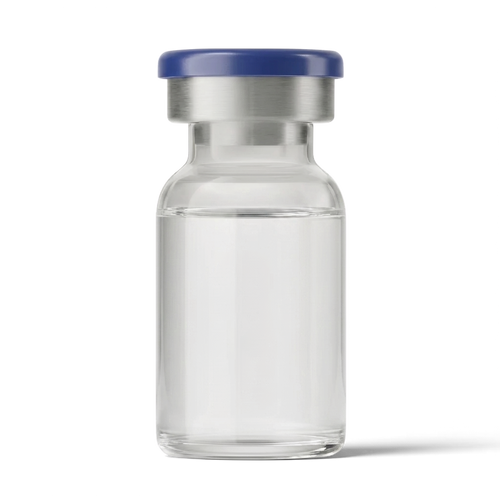
Bacteriostatic Water 10mL — Sterile Multi-Use Laboratory Water with 0.9% Benzyl Alcohol
Sterile Preserved Laboratory Water
STARTING AT ▸ $22.00