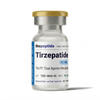
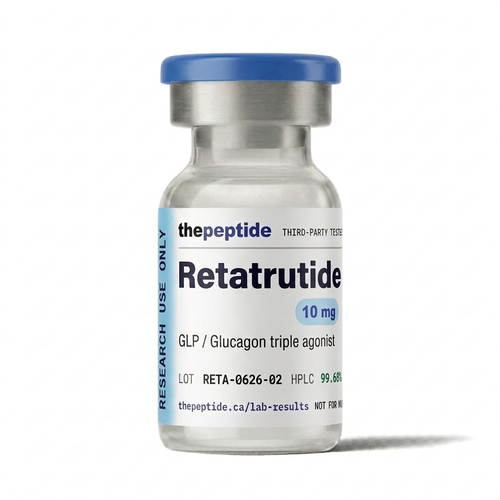
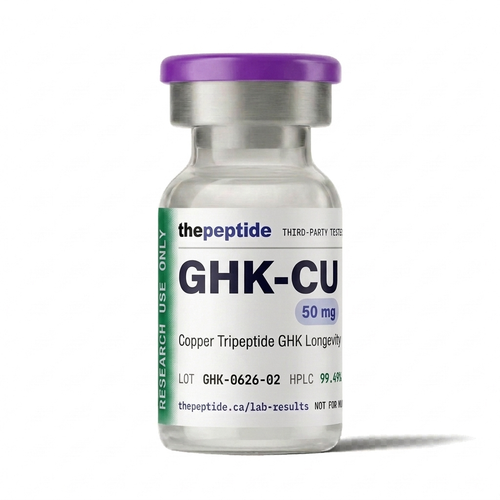
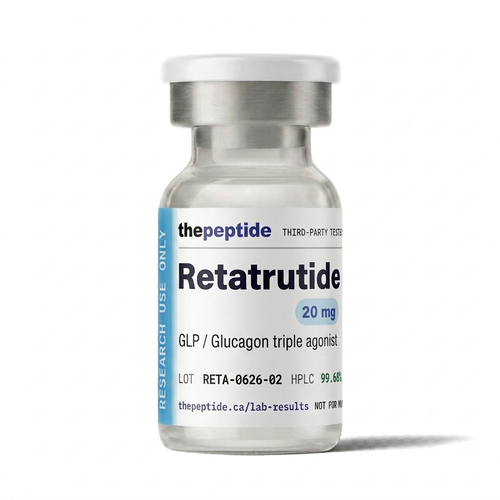
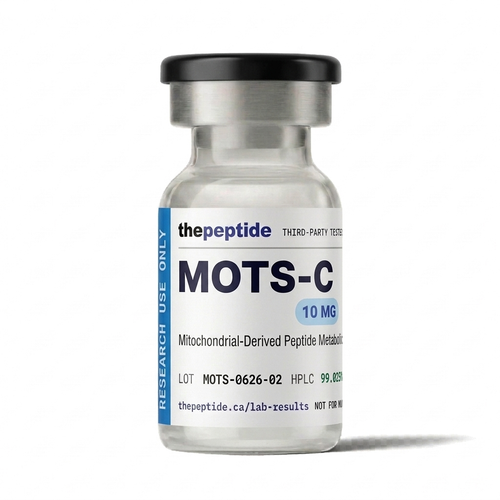
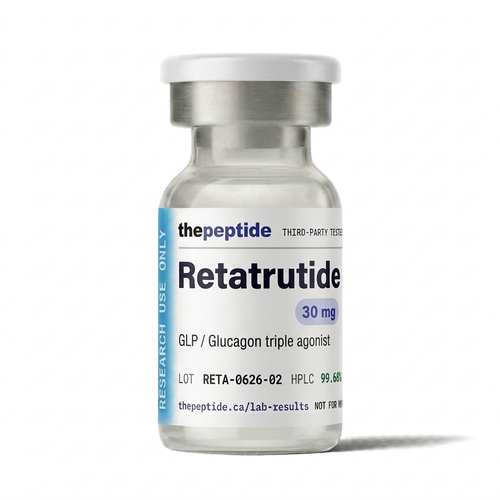
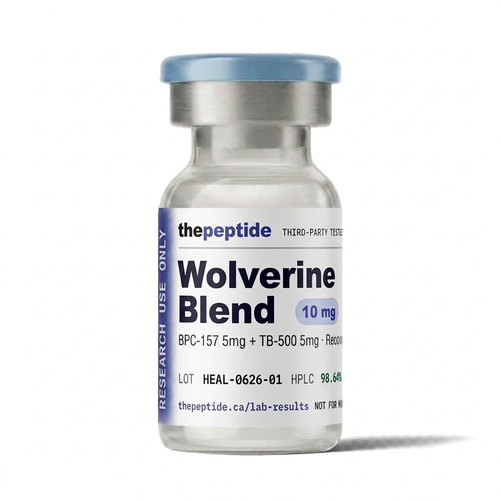
Just done my second dose this week. Fast shipping👍
Kaye Cabrias
Verified order
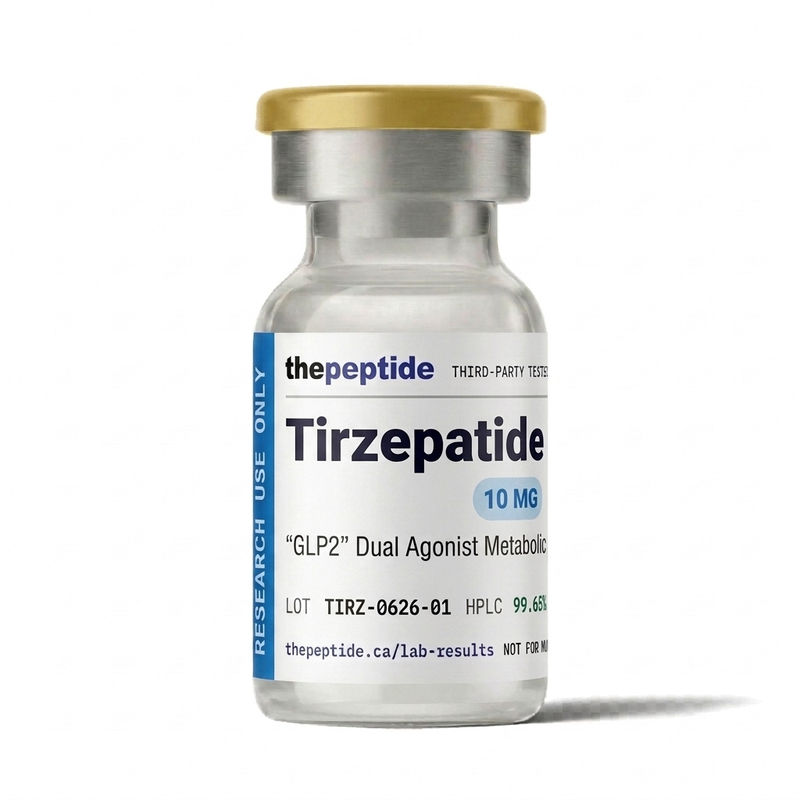
Dual GIP/GLP-1 Receptor Agonist
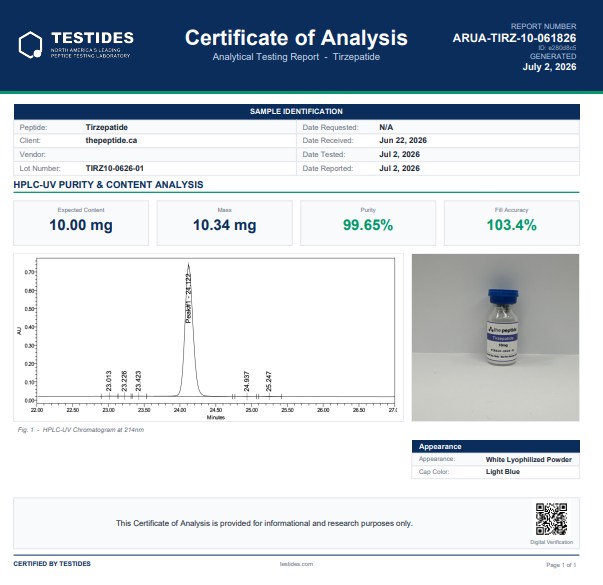
Third-party verified · 99.65% purity · 10.34 mg contentHPLC-UV by Testides (Toronto) · Lot TIRZ10-0626-01 · View COA →Read the full research guide →✓ Testides (Toronto) certificate held — lot TIRZ10-0626-01
Analysed 2 July 2026 by Testides, Toronto, report reference ARUA-TIRZ-10-061826: 99.65% purity by HPLC-UV at 214 nm, measured peptide content 10.34 mg against a 10 mg nominal fill.
This is one of only four lots on this site that holds an actual Testides certificate, alongside Retatrutide 10mg (99.68%), BPC-157 10mg (99.64%) and the Wolverine Blend. Every other lot we sell is Janoshik-only with Testides confirmation pending — including both Semaglutide sizes.
Tirzepatide is a 39-residue, C-terminally amidated peptide built on the GIP backbone and engineered to agonise both the GIP and the GLP-1 receptor, supplied here as 10 mg of lyophilised powder for laboratory research.
The phrase "dual agonist" is used loosely across this category, so it is worth defining precisely. Tirzepatide is not a co-formulation of two peptides and it is not a GLP-1 analogue with incidental GIP activity. It is a single molecule whose sequence is, in Health Canada's own wording from the Mounjaro product monograph, "based on the GIP sequence" — meaning the parent scaffold is glucose-dependent insulinotropic polypeptide, not GLP-1 — and which nonetheless activates the GLP-1 receptor with therapeutically relevant potency. Three modifications make that work: α-aminoisobutyric acid at positions 2 and 13, a C-terminal amide, and the lysine at position 20 attached to 1,20-eicosanedioic acid via a linker — a C20 fatty diacid tethered through γ-glutamic acid and two AEEA spacer units.
Each has a job. Aib² sits at the DPP-4 cleavage site and blocks it, the same trick semaglutide uses at its own position 8; Aib¹³ stabilises the helical conformation. The C20 diacid drives albumin binding and produces an elimination half-life Health Canada gives as approximately 5 days, supporting once-weekly administration of the licensed product. Formula C₂₂₅H₃₄₈N₄₈O₆₈, molecular weight 4813 Da, CAS 2023788-19-2.
What makes tirzepatide interesting as a reagent rather than merely as a commercial product is that it is not a balanced dual agonist, and the imbalance was characterised in detail before anyone knew whether it mattered. Willard and colleagues calculated receptor occupancy at clinically efficacious doses and found substantially greater engagement of the GIP receptor than the GLP-1 receptor. More unusually, its behaviour differs by receptor: at GIPR it mimics native GIP, while at GLP-1R it is biased, favouring cAMP generation over β-arrestin recruitment and driving weaker receptor internalisation than GLP-1 itself. In primary islets, β-arrestin1 limited the insulin response to GLP-1 but not to GIP or tirzepatide. That is a testable pharmacological hypothesis for why a dual agonist outperforms a selective one, and it is the reason this molecule is worth having in a comparative signalling panel alongside semaglutide and the triple agonist retatrutide.
The evidence record is large and the honest reading of it is not one-directional. Tirzepatide beat semaglutide on weight and glycaemic endpoints in two head-to-head trials — both open-label, one against a comparator dose that was not the weight-management dose. On hard cardiovascular outcomes the picture reverses: SURPASS-CVOT met non-inferiority against dulaglutide but not superiority, while semaglutide holds placebo-controlled outcome superiority from SELECT. Both facts are below, next to each other, because publishing only the favourable half is how this category lost its credibility in the first place.
This vial is supplied strictly as a laboratory reagent. We publish no dosing, route, schedule, titration or administration guidance of any kind. At $74.99 for 10 mg it is $7.50 per nominal milligram, or $7.25 per milligram actually measured on this lot's 10.34 mg content.
For laboratory and research use only. Not for human consumption, veterinary use, or therapeutic application. Not approved by Health Canada. We do not provide preparation, dilution or administration guidance for any compound we sell.
| Compound | Tirzepatide, lyophilised powder, 10 mg |
|---|---|
| Synonyms / development code | LY3298176; "twincretin". Licensed product brands: Mounjaro, Zepbound |
| Compound class | Dual GIP / GLP-1 receptor agonist; acylated incretin analogue; imbalanced and biased agonist |
| CAS number | 2023788-19-2 |
| Molecular formula | C₂₂₅H₃₄₈N₄₈O₆₈ |
| Molecular weight | 4813 Da (Health Canada product monograph); 4813.53 g/mol average |
| Sequence (one-letter, Aib as X) | YXEGTFTSDYSIXLDKIAQK*AFVQWLIAGGPSSGAPPPS-NH₂ (* = acylated Lys²⁰) |
| Sequence (three-letter) | Tyr-Aib-Glu-Gly-Thr-Phe-Thr-Ser-Asp-Tyr-Ser-Ile-Aib-Leu-Asp-Lys-Ile-Ala-Gln-Lys(C20-diacid-γGlu-AEEA-AEEA)-Ala-Phe-Val-Gln-Trp-Leu-Ile-Ala-Gly-Gly-Pro-Ser-Ser-Gly-Ala-Pro-Pro-Pro-Ser-NH₂ |
| Peptide length | 39 residues, C-terminally amidated; no disulfide bonds; two non-proteinogenic Aib residues |
| Backbone and modifications | Based on the GIP sequence; Aib at positions 2 and 13; C-terminal amide; Lys²⁰ attached to 1,20-eicosanedioic acid (C20 diacid) via a γGlu + 2 × AEEA linker |
| Vial contents | 10 mg lyophilised tirzepatide, white to off-white, no excipient, sealed vial |
| Current lot | TIRZ10-0626-01 — Testides report reference ARUA-TIRZ-10-061826 |
| Verified purity | 99.65% |
| Measured content | 10.34 mg per vial (10 mg label) |
| Test method | HPLC-UV, 214 nm detection — purity and quantitative content. Analysis conducted 2 July 2026 |
| Testing laboratory | Testides, Toronto — certificate held for this lot, one of four such lots on this site |
| Storage | Lyophilised: −20 °C long-term, 2–8 °C short-term; sealed, desiccated, protected from light |
| Research applications | Comparative GIPR versus GLP-1R potency and occupancy work; biased-agonism assays (cAMP versus β-arrestin recruitment); receptor internalisation and trafficking; incretin receptor co-expression and heteromer studies; primary islet insulin-secretion assays; albumin-binding and lipidation structure–activity work; dual- versus mono-agonist comparative panels; RP-HPLC and LC-MS/MS method development |
| Related compounds | Semaglutide 10mg · Semaglutide 5mg · Retatrutide 10mg · Retatrutide 30mg · Bacteriostatic water 10ml |
| Ships from | British Columbia, Canada — free tracked shipping Canada-wide, dispatched within 48 hours |
| Intended use | Laboratory research only — in vitro and preclinical. Not a drug; not for human or veterinary use |
Bench handling only. No dosing, route, schedule or administration guidance is given or implied anywhere on this page.
Dry material. −20 °C for long-term holding, 2–8 °C short-term, sealed, desiccated and protected from light. Equilibrate the vial to room temperature before breaking the seal: lyophilised peptide is hygroscopic and cold powder condenses atmospheric moisture immediately, which is the commonest way a dry peptide acquires water it will not lose again.
Treat it as a surfactant. The C20 diacid makes tirzepatide amphiphilic by design — more so than semaglutide's C18, since the chain is two carbons longer. Three consequences follow. It adsorbs to hydrophobic surfaces, so dilute solutions in untreated polypropylene lose measurable peptide to the tube wall. Agitation is actively harmful: shaking or vortexing drives the molecule to the air–liquid interface where it denatures and aggregates, so add diluent slowly down the vial wall and swirl or roll rather than shake. And lipidated incretin analogues self-associate into oligomers in a concentration- and pH-dependent way, so a stock at one concentration is not a linearly scaled version of one at another — the usual explanation when a dilution series misbehaves at the top end.
Degradation chemistry, which is simpler here than for most peptides. No cysteine and no methionine means no disulfide scrambling and no thioether oxidation — the two pathways that dominate most peptide stability guidance simply do not apply. What remains is aspartate isomerisation and backbone hydrolysis at acidic pH, and base-mediated cleavage of the amide bond joining the C20 chain to Lys²⁰. That last one yields des-acyl tirzepatide: a species that retains receptor pharmacology and loses the albumin binding entirely, so it is invisible to a functional assay and obvious to a chromatographic one. If you are developing a stability-indicating method, that is the peak to resolve.
Reconstitution and aliquoting. Conventional laboratory diluents are sterile water or an aqueous buffer; bacteriostatic water where multi-use aliquots are wanted. Prepare single-use aliquots at first reconstitution so a working stock is never repeatedly thawed, and do not re-freeze thawed material. Reconstituted-stability windows circulating on vendor pages come from supplier technical monographs rather than published forced-degradation work on this molecule, and we present none as established. In-use periods on the licensed injectable products belong to buffered, preserved, tonicity-adjusted solutions and do not transfer to unformulated peptide.
As a dry lyophilisate the material tolerates ambient temperature for the length of domestic transit, which is why it ships without a cold chain. Move it to −20 °C on arrival.
Shipping is free and tracked, Canada-wide, on every order, with no minimum spend. Orders are dispatched within 48 hours, Monday to Friday, from our facility in British Columbia. The vial is already in Canada, so a domestic order has no international leg, no customs clearance and no brokerage charge.
Vials ship sealed and packed dry with protective padding in plain outer packaging, with lot TIRZ10-0626-01 on the label so it can be matched against the published certificate figures. A tracking number is issued at dispatch. Current transit estimates by province: shipping page.
Report transit damage or non-delivery to info@thepeptide.ca within 48 hours of the expected delivery date, with your order number and photographs of the outer packaging and the vial where applicable. Confirmed damage in transit and confirmed non-delivery are resolved by replacement or refund.
Sealed, unopened vials in original condition are exchangeable within 14 days of delivery. Nothing that has been opened, punctured, reconstituted or otherwise prepared can be accepted back: once the seal is broken there is no way to verify temperature history, light exposure or chain of custody, and material of unknown handling history will not be returned to circulation.
Governing terms, including how money is refunded and to which payment method: refund policy.
The usual answer — "two receptors are better than one" — is not an explanation, and the field's own history says it should not have worked at all.
The paradox first. GIP is the other major incretin, and in type 2 diabetes its insulinotropic effect is markedly blunted — which is why GIP was written off as a therapeutic target for years, and why several programmes pursued GIP receptor antagonism rather than agonism. Tirzepatide's efficacy was therefore a surprise rather than a prediction, and whether the GIP contribution is mediated by the pancreatic islet, by adipose tissue, or centrally in appetite-regulating circuits is still not settled. Anyone stating a definite mechanism for the GIP arm is stating more than the literature supports.
What has been measured is the shape of the pharmacology, and it is unusual in two distinct ways. Willard and colleagues established a method for calculating occupancy at each receptor at clinically efficacious doses and reported:
Imbalanced — it is more a GIP agonist than a GLP-1 agonist
Occupancy analysis showed "a greater degree of engagement of tirzepatide for the GIP receptor than the GLP-1 receptor," which the authors describe as corroborating an imbalanced mechanism of action. At GIPR its signalling mimics native GIP. So "dual agonist" understates it: the two arms are not equal, and a design assuming equipotency at both receptors will mis-scale.
Biased — at GLP-1R it signals differently from GLP-1
At the GLP-1 receptor tirzepatide favours cAMP generation over β-arrestin recruitment, with a correspondingly weaker ability to drive receptor internalisation than GLP-1. β-Arrestin recruitment is the desensitisation and internalisation arm; biasing away from it means the receptor stays at the surface and stays coupled. In primary islets, β-arrestin1 limited the insulin response to GLP-1 but not to GIP or tirzepatide — a direct functional consequence of the bias.
Why this matters at the bench. If an assay reads out only cAMP, tirzepatide and a conventional GLP-1 agonist will look more alike than they are; the difference lives in the β-arrestin and internalisation channels. Any comparative panel that omits those measures the thing tirzepatide was not differentiated on. This is also the cleanest available reason to run tirzepatide and semaglutide side by side rather than treating them as interchangeable incretin reference agonists.
Health Canada's Mounjaro product monograph gives the modifications in one sentence: tirzepatide "is based on the GIP sequence and contains aminoisobutyric acid (Aib) in positions 2 and 13, a C-terminal amide, and Lys residue at position 20 is attached to 1,20-eicosanedioic acid via a linker." Each element earns its place.
Aib² — proteolytic protection at the cleavage site
Dipeptidyl peptidase-4 inactivates both native incretins by removing the N-terminal dipeptide. Position 2 is the scissile residue. α-Aminoisobutyric acid is quaternary — both α-hydrogens replaced by methyls — and the steric bulk obstructs the protease. Structurally the same solution semaglutide applies at its own position 8; convergent engineering on the same liability.
Aib¹³ — conformational stabilisation
Aib is a strong helix promoter. Class-B1 GPCR peptide ligands bind with their C-terminal half helical and anchored in the extracellular domain while the N-terminus inserts into the transmembrane core. A second Aib mid-sequence biases the free peptide towards the bound conformation, which reduces the entropic cost of binding. That is the standard structural rationale for a mid-chain Aib, and we present it as rationale; we did not retrieve a primary paper measuring the conformational contribution of Aib¹³ specifically.
C20 diacid on Lys²⁰ — the half-life
1,20-Eicosanedioic acid, tethered through γ-glutamic acid and two AEEA (2-(2-aminoethoxy)ethoxy acetic acid) spacers to the Lys²⁰ ε-amino group. The mechanism is reversible albumin binding, which shields the peptide from proteolysis and takes it above the glomerular filtration threshold. Note the chain is C20, two carbons longer than semaglutide's C18, and the spacer chemistry is the same family — a direct, informative structure–activity comparison between two marketed lipidated peptides. Health Canada gives the resulting elimination half-life as approximately 5 days.
C-terminal amide — and the C-terminal extension
Amidation removes the free C-terminal carboxylate, blocking carboxypeptidase attack and removing a negative charge. The last nine residues, PSSGAPPPS, are not native GIP; that proline-rich motif is the exendin-4 C-terminal extension, a well-known stabilising element borrowed from a different incretin analogue lineage. Tirzepatide is therefore a chimera rather than a straightforwardly modified GIP — GIP-based, with a GLP-1-like N-terminal region and an exendin-derived tail.
One consequence for analytical work: the molecule has no cysteine and no methionine, so disulfide scrambling and thioether oxidation — the two pathways most peptide stability discussions centre on — do not apply. The degradation species worth resolving is des-acyl tirzepatide, which retains receptor pharmacology and loses the half-life entirely.
Yes — two products, two indications, verified against Health Canada records. None of this makes the vial on this page an authorised drug; it is an unapproved research reagent with no DIN and no authorisation of any kind.
MOUNJARO — tirzepatide injection, type 2 diabetes. Sponsor Eli Lilly Canada Inc., submission control number 259103. Authorised November 2022: the Summary Basis of Decision gives the Notice of Compliance as 24 November 2022, while the product monograph lists a date of initial authorisation of 23 November 2022. We print both rather than pick one, because the two Health Canada documents differ by a day and we cannot resolve which is the operative date.
Six strengths, six DINs: 02532891 (2.5 mg/0.5 mL), 02532905 (5 mg), 02532913 (7.5 mg), 02532921 (10 mg), 02532948 (12.5 mg), 02532956 (15 mg).
ZEPBOUND — tirzepatide injection, chronic weight management. Health Canada approval announced 13 May 2025, available in Canada from 9 July 2025, described by the sponsor as the first and only Health Canada-authorised dual receptor agonist for chronic weight management. DIN 02557533 (10 mg/0.6 mL), Eli Lilly Canada, status Marketed. Health Canada has since also authorised Zepbound for obstructive sleep apnea in adults living with obesity.
The contrast with semaglutide is the useful part. Semaglutide's Canadian composition patent lapsed over an unpaid maintenance fee and Canada became the first G7 country to approve generic semaglutide, in April and May 2026. No equivalent has happened to tirzepatide: it remains under patent in Canada with no generic, which means the price and supply pressures that drive grey-market demand have moved in opposite directions for the two molecules over the past year. A page that describes them as facing the same market is describing 2024, not 2026.
Health Canada's public advisory of 9 April 2026 on injectable peptides bought online named 14 compounds — BPC-157, CJC-1295, DSIP, Epitalon, GHK-Cu, HCG, Ipamorelin, KPV, Melanotan I and II, MOTS-C, NAD+, SS-31, TB-500 and Retatrutide. Tirzepatide was not among them. That absence is a fact and not a shield: the advisory's operative statement is that research-use-only labelling "does not make these products legal or exempt from regulatory requirements," and on 11 June 2026 the Superior Court of Québec granted Health Canada a permanent injunction against a Québec online peptide retailer covering manufacture, testing, distribution, sale and advertising through sites reachable from Canadian IP addresses. Neither action named tirzepatide; both rest on reasoning that does not depend on which compound is involved. We are not lawyers and this is not legal advice.
No. GLP-1 receptor agonists including tirzepatide are not on the Prohibited List. They are on the Monitoring Programme, which is a different document and carries no sanction. Most vendor pages in this category assert or imply otherwise, and correcting that plainly is worth more than repeating it.
WADA's Monitoring Programme exists to detect patterns of use in sport without prohibiting a substance. Semaglutide was added to it in 2024, and WADA has funded analytical method development for detecting GLP-1 receptor agonists in blood and dried blood spots — assay capability first, prevalence data second, policy decision third. A finding on a monitored substance is not an anti-doping rule violation.
The policy decision has now been taken publicly. On 10 September 2026 WADA's Executive Committee confirmed that GLP-1 drugs — semaglutide and tirzepatide named among them — would not be added to the 2027 Prohibited List, remaining on the Monitoring Programme. WADA's senior director for science and medicine, Professor Olivier Rabin, paired the decision with a caution about using these drugs without medical supervision. A caution is not a prohibition, and the two are routinely conflated in downstream reporting.
The fallback argument is section S0, Non-Approved Substances, which covers substances with no current approval by any governmental regulatory health authority for human therapeutic use. Tirzepatide holds Health Canada authorisations under two brand names plus FDA and EMA approvals, so S0 does not reach the substance by the clause's own wording. What S0 can reach is an unapproved preparation — a different question, and one no product page can answer about a particular sample.
Two qualifications we will not omit. Both documents are reissued annually, so this describes 2026 and the announced 2027 list, not a permanent status. And this is our reading of published WADA material, not a WADA determination. Any athlete in a tested sport should obtain a written determination from their national anti-doping organisation rather than rely on any vendor's reading, ours included.
On weight and glycaemic endpoints, two randomised head-to-head trials favoured tirzepatide. On cardiovascular outcomes, the evidence currently favours semaglutide. Both statements are true simultaneously, and almost every page answering this question publishes only the first.
SURPASS-2 — type 2 diabetes, n = 1,879, 40 weeks, randomised but OPEN-LABEL
Escalating tirzepatide doses versus semaglutide 1 mg, measuring HbA1c and body weight.
The comparator was semaglutide 1 mg — the type 2 diabetes dose, not the higher weight-management dose. This trial cannot answer how the two compare as weight-management agents and was never designed to. Discontinuation for adverse events was higher on tirzepatide (5.1 / 7.7 / 7.9%) than on semaglutide (3.8%).
SURMOUNT-5 — obesity without diabetes, n = 751, 72 weeks, randomised but OPEN-LABEL
Maximum tolerated tirzepatide versus maximum tolerated semaglutide — the fair dose comparison. Body weight and waist circumference were measured; both favoured tirzepatide.
Open-label design matters here more than in a laboratory endpoint: appetite, adherence and behaviour all mediate weight change, and neither participants nor investigators were blinded in either trial. Unblinding is unlikely to account for the difference on its own, but it is a real limitation and should be stated rather than skipped.
The reversal on cardiovascular outcomes.
Semaglutide, SELECT: randomised, double-blind, placebo-controlled, n = 17,604, mean follow-up 40 months, measuring a MACE composite against placebo. Superiority over placebo demonstrated.
Tirzepatide, SURPASS-CVOT: randomised, double-blind, active-comparator against dulaglutide, n = 13,165, median four-year follow-up, measuring a primary composite. HR 0.92. Non-inferiority met (P = 0.003); superiority not met (P = 0.09).
These are different trial questions and cannot be ranked directly — but the plain summary is that tirzepatide has not demonstrated cardiovascular superiority over anything, and semaglutide has, against placebo. No trial has compared tirzepatide with semaglutide on cardiovascular outcomes.
So the accurate answer is: better on weight and glycaemia in open-label head-to-head trials; not shown to be better on hard cardiovascular endpoints, where semaglutide holds the only placebo-controlled superiority in the class. Which reagent is right for a given experiment follows from which of those the experiment is about. For the selective GLP-1 comparator see Semaglutide 10mg or the smaller 5 mg vial; for the GLP-1/GIP/glucagon triple agonist, Retatrutide 10mg.
It does not support a cardiovascular superiority claim. SURPASS-CVOT met non-inferiority against dulaglutide and missed superiority at P = 0.09. "Tirzepatide protects the heart better" is not a finding of that trial, and there is no placebo-controlled cardiovascular outcome trial of tirzepatide to appeal to instead.
It does not support a durable effect after withdrawal. SURMOUNT-4 is unambiguous and has its own block below.
It does not support a settled mechanism for the GIP arm. GIP's insulinotropic action is blunted in type 2 diabetes — the observation that made GIP agonism look like a dead end and drove several programmes toward GIP receptor antagonism instead. Tirzepatide works anyway. Whether the GIP contribution acts through the islet, adipose tissue or central appetite circuits is genuinely unresolved, and the coexistence of credible agonist and antagonist development programmes against the same receptor is the clearest possible signal that the field does not yet know.
It does not support a favourable tolerability claim against semaglutide. In SURPASS-2, discontinuation for adverse events ran 5.1–7.9% across tirzepatide arms against 3.8% on semaglutide 1 mg. In SURMOUNT-1, gastrointestinal events were the dominant adverse events: nausea 24.6–33.3% versus 9.5% on placebo, diarrhoea 18.7–23.0% versus 7.3%, vomiting 8.3–12.2% versus 1.7%.
It does not support treating weight change as body composition. SURMOUNT-1's endpoint was percent change in body weight, not fat mass. What proportion of the loss is lean tissue is an open question that these trials were not designed to answer.
And the boundary on all of it: every trial above studied a licensed pharmaceutical product with a defined formulation, fill and stability dossier. None of it is evidence about an unformulated research peptide, and we do not present it as if it were.
The effect reverses, and SURMOUNT-4 was built specifically to measure how far. It is a randomised withdrawal design, which is the strongest available architecture for this question.
Design: 36-week open-label lead-in on tirzepatide, then 670 participants randomised 1:1 to continue tirzepatide or switch to placebo, double-blind, for a further 52 weeks.
Lead-in (week 0–36): open-label treatment, with mean body weight measured at week 36.
Randomised phase (week 36–88): those continuing lost further weight; those switched to placebo regained, and the difference between arms was significant (P < 0.001).
A post hoc analysis published in JAMA Internal Medicine in November 2025 examined the cardiometabolic consequences of that regain and reported that a large majority of placebo-switched participants had substantial weight regain within a year of withdrawal, with associated deterioration in cardiometabolic parameters.
This is the same pattern semaglutide shows in the STEP 1 extension, where roughly two-thirds of lost weight returned and cardiometabolic markers reverted towards baseline. Mechanistically neither result is surprising — a receptor agonist acting on intact, feedback-regulated appetite and gastric-emptying physiology leaves little trace once occupancy falls — but it is measured rather than assumed, in both molecules, and it is the finding most consistently omitted from pages selling either. Any protocol asking about persistence needs an off-treatment arm.
Gastrointestinal events dominate, they are dose-related, and they concentrate during escalation. SURMOUNT-1 (n = 2,539, randomised, double-blind, placebo-controlled, 72 weeks) gives the cleanest numbers, reported as ranges across the 5, 10 and 15 mg arms against placebo: nausea 24.6–33.3% versus 9.5%; diarrhoea 18.7–23.0% versus 7.3%; constipation 11.7–17.1% versus 5.8%; vomiting 8.3–12.2% versus 1.7%. Discontinuation specifically for adverse events was 4.3–7.1% versus 2.6% on placebo. SURPASS-CVOT likewise reported more gastrointestinal events on tirzepatide than on dulaglutide, with overall adverse-event incidence similar between groups.
Gallbladder and biliary disease is a class signal with a clean exposure–response gradient. He and colleagues pooled 76 randomised trials and 103,371 participants of GLP-1 receptor agonists: overall RR 1.37 (95% CI 1.23–1.52); cholelithiasis 1.27 (1.10–1.47); cholecystitis 1.36 (1.14–1.62). In the 13 trials with a weight-loss indication RR was 2.29 (1.64–3.18) against 1.27 (1.14–1.45) elsewhere; higher doses 1.56 (1.36–1.78) against 0.99 (0.73–1.33) for lower; longer duration 1.40 (1.26–1.56) against 0.79 (0.48–1.31). A gradient across dose, duration and indication is what a real signal looks like. That analysis covered GLP-1 receptor agonists; tirzepatide is a dual agonist and we do not claim these pooled estimates transfer to it without qualification. We cite it as class context, not as a tirzepatide-specific finding.
The pancreatitis and gastroparesis signals are weaker than their citation count implies. The most-cited source, Sodhi and colleagues, is a retrospective claims-database cohort — not randomised — and the interval widths tell the story: adjusted hazard ratio for pancreatitis 9.09 with a 95% CI of 1.25 to 66, bowel obstruction 4.22 (1.02–17.40), gastroparesis 3.67 (1.15–11.90), biliary disease 1.50 (0.89–2.53) and not significant. A confidence interval spanning a 53-fold range describes very few events. The authors flag missing dose and duration data, ICD coding misclassification, and a study population mostly with diabetes, which independently causes gastroparesis. A 2025 reanalysis in Alimentary Pharmacology & Therapeutics concluded that part of the apparent excess is explained by baseline BMI rather than drug exposure. We could not retrieve that reanalysis in full and quote none of its effect estimates.
The useful generalisation: gastrointestinal events are frequent, real, dose-dependent and the dominant reason for discontinuation; gallbladder disease is a credible exposure-dependent signal across the class, confounded in part by rapid weight loss itself; and the rarer gastrointestinal catastrophes are supported by evidence far weaker than the confidence with which they are usually cited in either direction.
Because we send lots to Testides in Toronto selectively, and this is one of the four that has come back. The other three are Retatrutide 10mg (99.68%), BPC-157 10mg (99.64%) and the Wolverine Blend. Everything else in the catalogue is Janoshik-only with Testides confirmation pending — including Semaglutide 5mg and Semaglutide 10mg, which we label that way on their own pages.
This lot: TIRZ10-0626-01, analysed 2 July 2026, report reference ARUA-TIRZ-10-061826. Purity 99.65% by HPLC-UV with detection at 214 nm; measured peptide content 10.34 mg against a 10 mg nominal fill — within about 3.4% of label, unusually tight for a lyophilised fill.
The 214 nm detail is worth understanding rather than skimming. Most peptide HPLC purity is run with UV detection around 214–220 nm because that is where the amide bond of the peptide backbone absorbs, not where aromatic side chains do. Detection at 280 nm — the other common choice — sees only tryptophan, tyrosine and phenylalanine, so it is blind to any impurity lacking an aromatic residue. Backbone detection at 214 nm sees every peptidic species present, including truncations and deletions that carry no chromophore. That makes a 214 nm purity figure a stricter number than a 280 nm one, which is why a report that names its wavelength is telling you something a report that does not name it is withholding.
Purity and content still answer different questions. Purity is the proportion of chromatographic peak area belonging to the target peptide — what the peptide present is, as against truncations, deletions, des-acyl species and degradation products. Content is the absolute mass, which is what governs a molar calculation. A vial can be 99% pure and underfilled, or correctly filled and 90% pure. Both figures, same lot, lot matching the label: full walkthrough here.
What this certificate does not cover. It is an HPLC-UV purity and content assay. It carries no mass-spectrometry identity confirmation, no endotoxin or microbial bioburden testing, no residual solvent or heavy-metal analysis, no aggregation assessment, and no counter-ion or salt-content determination. We also make no accreditation claim of any kind for either laboratory — a certificate from a named third-party laboratory on a named lot is what we have, and that is what we say we have.
Independent analyses of grey-market peptide samples have repeatedly reported mislabelling, concentration error and contamination at meaningful rates. A lot-specific third-party report is the minimum defence against that. A percentage typed onto a product page with no report reference and no named laboratory is not evidence of anything at all.
Each citation was checked against a MEDLINE-derived record or a publisher page. Design and size are given because they determine what each result can and cannot support — in this programme, notably, whether a trial was blinded.
1. Coskun T, Sloop KW, Loghin C, et al. LY3298176, a novel dual GIP and GLP-1 receptor agonist for the treatment of type 2 diabetes mellitus: From discovery to clinical proof of concept. Mol Metab. 2018;18:3–14. PMID 30473097. — The discovery paper. In vitro pharmacology through to early clinical proof of concept.
2. Willard FS, Douros JD, Gabe MB, et al. Tirzepatide is an imbalanced and biased dual GIP and GLP-1 receptor agonist. JCI Insight. 2020;5(17):e140532. PMID 32730231. — The mechanistic paper, and the most useful one for laboratory work. Establishes receptor-occupancy methodology, the GIPR-over-GLP-1R imbalance, cAMP-over-β-arrestin bias at GLP-1R, weaker GLP-1R internalisation, and the primary-islet β-arrestin1 result.
3. Frías JP, Davies M, Rosenstock J, et al. Tirzepatide versus Semaglutide Once Weekly in Patients with Type 2 Diabetes. N Engl J Med. 2021;385(6):503–515. PMID 34170647. — SURPASS-2. Randomised, OPEN-LABEL, n = 1,879, 40 weeks, measuring HbA1c and body weight. Comparator semaglutide 1 mg — the diabetes dose.
4. Jastreboff AM, Aronne LJ, Ahmad NN, et al. Tirzepatide Once Weekly for the Treatment of Obesity. N Engl J Med. 2022;387(3):205–216. PMID 35658024. — SURMOUNT-1. Randomised, double-blind, placebo-controlled, n = 2,539, 72 weeks. The source for the adverse-event ranges quoted above.
5. Garvey WT, Frias JP, Jastreboff AM, et al. Tirzepatide once weekly for the treatment of obesity in people with type 2 diabetes (SURMOUNT-2). Lancet. 2023. PMID 37385275. — Double-blind, randomised, multicentre, placebo-controlled phase 3 in the type 2 diabetes population, where weight effects are consistently smaller than in SURMOUNT-1. Volume and page range not independently confirmed; title, year and PMID are.
6. Aronne LJ, et al. Continued Treatment With Tirzepatide for Maintenance of Weight Reduction in Adults With Obesity: The SURMOUNT-4 Randomized Clinical Trial. JAMA. 2024;331(1):38–48. PMID 38078870. — Randomised withdrawal design, 36-week open-label lead-in then 670 participants randomised double-blind for 52 weeks, measuring body weight in both arms to week 88 (difference between arms P < 0.001). Volume and page range taken from the standard citation rather than confirmed against a primary record; the design details are from the sponsor-published trial report.
7. Aronne LJ, et al. Tirzepatide as Compared with Semaglutide for the Treatment of Obesity. N Engl J Med. 2025;393(1):26–36. PMID 40353578. — SURMOUNT-5. Phase 3b, randomised, OPEN-LABEL, n = 751, 72 weeks, measuring body weight and waist circumference. The fair-dose head-to-head.
8. Nicholls SJ, et al. Cardiovascular Outcomes with Tirzepatide versus Dulaglutide in Type 2 Diabetes. N Engl J Med. 2025;393:2409–2420. PMID 41406444. — SURPASS-CVOT. Randomised, double-blind, active-comparator non-inferiority, n = 13,165, median four-year follow-up, measuring a primary composite. HR 0.92. Non-inferiority met (P = 0.003); superiority not met (P = 0.09).
9. Lincoff AM, Brown-Frandsen K, Colhoun HM, et al. Semaglutide and Cardiovascular Outcomes in Obesity without Diabetes. N Engl J Med. 2023;389(24):2221–2232. PMID 37952131. — SELECT. Included on a tirzepatide page because it is the comparison that keeps the cardiovascular claim honest: randomised, double-blind, placebo-controlled, n = 17,604, measuring a MACE composite — placebo-controlled superiority that tirzepatide has not yet demonstrated.
Mix any research peptides 10 mg or larger — the discount counts your whole order, not one product.
Laboratory supplies commonly ordered alongside research compounds.
Sterile Preserved Laboratory Water
STARTING AT ▸ $22.00Just done my second dose this week. Fast shipping👍
Appreciated having access to batch lot numbers and third-party CoA. Also free shipping, will order again.
